

What Causes Inner Tire Wear?
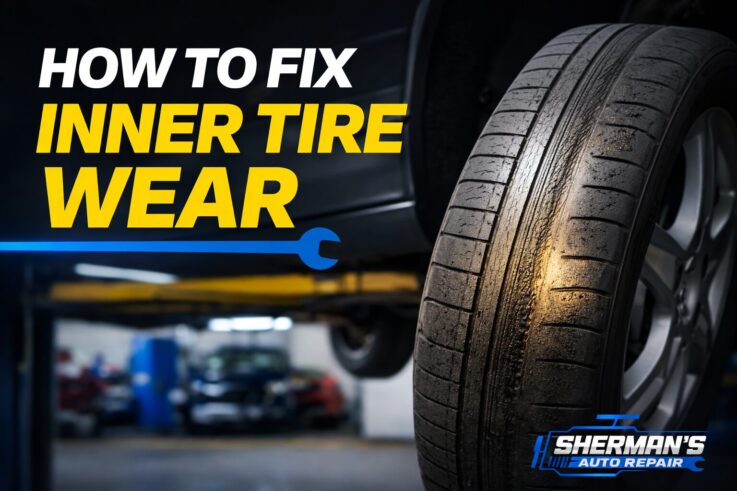
Inner tire wear happens when the inside edge of the tire loses tread faster than the center or outer edge. This is not normal wear. It means the wheel angle is out of specification or suspension components are no longer holding the wheel in the correct position.
The most common causes include:
Excessive negative camber (top of the tire tilted inward)
Incorrect toe settings (tire pointing slightly inward or outward)
Worn suspension components
Weak or sagging coil springs
Bent suspension parts from potholes or impacts
Inner tire wear will continue until the underlying mechanical issue is corrected.
Replacing the tire alone will not fix the problem.
Step 1: Confirm the Inner Tire Wear Pattern
Start by verifying that the wear is isolated to the inner shoulder.
Look for these signs:
Inside edge worn significantly more than the rest of the tire
Center tread still has usable depth
Outer edge shows less wear
Feathered or sharp tread edges on the inner side
Wear visible when turning the steering wheel fully outward
Because the inner edge faces inward, this damage often goes unnoticed during normal visual checks.
Step 2: Inspect Suspension and Steering Components
Before performing an alignment, all suspension and steering parts must be inspected. Worn components prevent the wheel from holding proper alignment angles.
A professional inspection should include:
Ball joints
Control arm bushings
Tie rods (inner and outer)
Struts or shocks
Coil springs
Wheel bearings
If any of these parts are worn, loose, bent, or weak, they must be replaced before alignment is performed.
Alignment performed on worn suspension components will not hold and tire wear will continue.
Step 3: Perform a Four-Wheel Alignment
A four-wheel alignment is required to correct the wheel angles.
This process measures and adjusts:
Camber (vertical tilt of the wheel)
Toe (direction the tire points)
Rear wheel alignment angles
Excessive toe is the most destructive condition and can wear a tire rapidly. Even small deviations can cause accelerated inner tire wear.
Both front and rear alignment must be checked, especially on vehicles with independent rear suspension.
Proper alignment restores the correct geometry and prevents further uneven wear.
Step 4: Evaluate Whether the Tire Can Still Be Used
After correcting the alignment, the tire must be inspected to determine if it is still safe.
The tire may remain in service if:
Tread depth is above minimum legal limits
Steel cords are not exposed
Wear is moderate and structural integrity remains intact
The tire must be replaced if:
Steel cords are visible
Inner shoulder is worn to minimum tread depth
Structural integrity is compromised
Once cords are exposed, the tire cannot be safely repaired.
Step 5: Replace the Tire If Necessary
If the tire is damaged beyond safe limits, replacement is required.
Replacement must always occur after the alignment correction.
Installing a new tire without correcting alignment will result in the same uneven wear.
This ensures the new tire wears evenly and reaches its full service life.
Can You Fix Inner Tire Wear Yourself?
Visual inspection can be performed by the vehicle owner, but correcting inner tire wear requires professional equipment.
Proper repair requires:
Alignment rack measurement systems
Suspension inspection tools
Precision adjustments to manufacturer specifications
Camber and toe are measured in fractions of a degree. Even small deviations significantly affect tire wear.
Professional alignment is required to correct the problem properly.
Why Inner Tire Wear Is a Safety Concern
Severe inner tire wear reduces tire strength and traction.
This can lead to:
Reduced braking performance
Poor wet-road traction
Increased blowout risk
Reduced vehicle stability
Because the damage occurs on the inside edge, it may progress unnoticed until the tire becomes unsafe.
Prompt inspection and correction prevent safety risks and further tire damage.
The Correct Way to Fix Inner Tire Wear
The proper repair sequence is:
Inspect suspension and steering components
Replace worn or damaged parts
Perform a professional four-wheel alignment
Replace tires if structural damage is present
Correcting the alignment first prevents repeated tire damage.
Once the wheel angles are restored to specification, tire wear returns to normal.
Get Inner Tire Wear Fixed at Sherman’s Auto Repair
Inner tire wear is a warning sign of alignment or suspension problems. Ignoring it can lead to premature tire replacement, unsafe driving conditions, and higher repair costs.
Sherman’s Auto Repair in Sarasota provides professional suspension inspections and four-wheel alignment services using precision alignment equipment.
Our technicians identify the root cause, correct the wheel alignment, and ensure your tires wear evenly and safely.
Schedule your inspection today to protect your tires and restore proper vehicle handling.

