
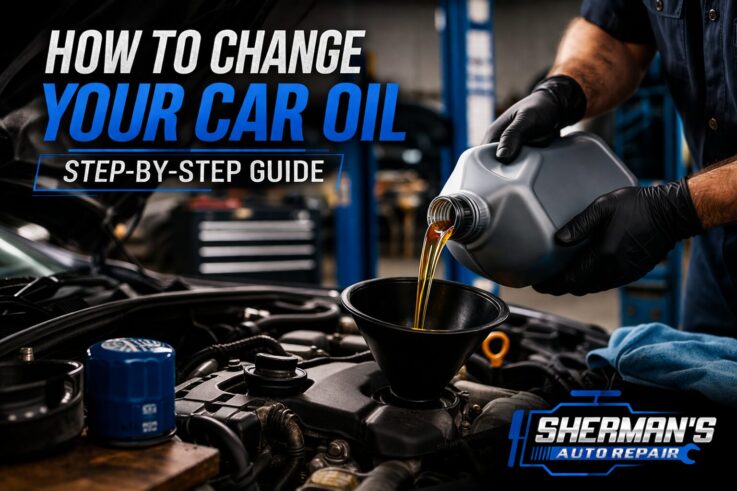

Changing your car’s oil is a routine maintenance task that keeps your engine properly lubricated and protected from internal wear. While the process is straightforward, it requires accuracy at each step to ensure proper sealing, correct oil levels, and safe operation.
Step 1: Prepare the Correct Oil and Tools
Before starting, confirm the exact oil specification and quantity required for your vehicle. This information is typically found in the owner’s manual or on the oil cap.
Make sure you have the following ready:
- Engine oil (correct viscosity and type)
- Oil filter (specific to your vehicle)
- Socket wrench for the drain plug
- Oil filter wrench
- Drain pan
- Funnel
- Jack and jack stands or ramps
Having everything prepared prevents interruptions once the oil has been drained.
Step 2: Raise the Vehicle Safely
Position the vehicle on a level surface and engage the parking brake. Use ramps or lift the front of the vehicle with a jack and secure it with jack stands.
Ensure the vehicle is stable before going underneath. If your vehicle has an undertray, remove it to access the oil pan and filter.
Step 3: Drain the Engine Oil
Place the drain pan beneath the oil pan. Using the correct socket, loosen the drain plug and remove it by hand.
Allow the oil to drain completely. This typically takes several minutes, depending on engine size and oil temperature. Wait until the flow reduces to a slow drip.
Step 4: Remove the Oil Filter
Locate the oil filter and loosen it using an oil filter wrench if necessary. Once loosened, remove it by hand.
Some oil will drain from the filter, so keep the drain pan positioned underneath.
Before installing the new filter, check that the old gasket is not stuck to the mounting surface.
Step 5: Reinstall the Drain Plug and Install the New Filter
Clean the drain plug and reinstall it by hand, then tighten it securely without overtightening.
Apply a light film of fresh oil to the gasket of the new filter. Install the filter by hand and tighten it until snug. Hand-tight is sufficient to create a proper seal.
Step 6: Refill the Engine with New Oil
Lower the vehicle if necessary. Open the hood and remove the oil filler cap.
Using a funnel, add the manufacturer-recommended amount of oil. Reinstall the cap once finished.
Step 7: Check Oil Level and Inspect for Leaks
Start the engine and let it run briefly to circulate the oil. Turn it off and check the oil level using the dipstick.
Inspect underneath the vehicle for any leaks around the drain plug and oil filter. Adjust the oil level if needed.
Step 8: Dispose of Used Oil Properly
Transfer the used oil into a sealed container and take it to a recycling facility or auto parts store that accepts used oil.
Professional Oil Change Service in Sarasota
If you prefer to have your oil changed professionally or want to ensure everything is handled correctly, Sherman’s Auto Repair in Sarasota provides reliable oil change services using the proper oil and filters for your vehicle.
Routine oil changes performed correctly help maintain engine performance and reduce the risk of long-term damage.

