
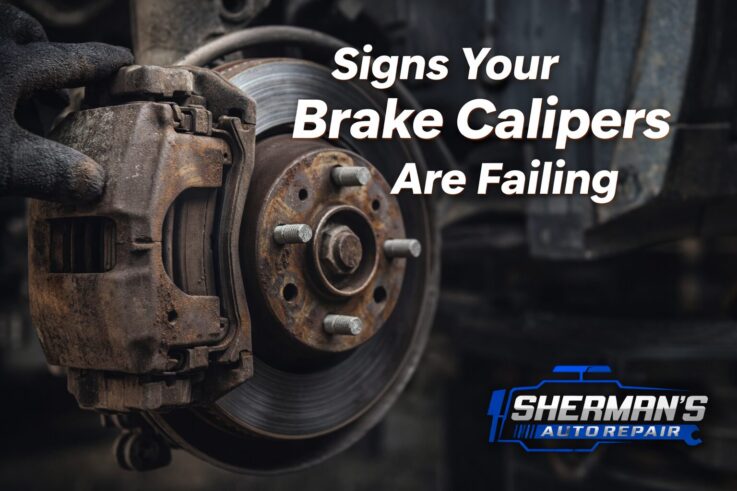

Brake calipers play a critical role in your vehicle’s braking system. When you press the brake pedal, hydraulic pressure pushes the caliper piston, which forces the brake pads against the brake rotor to slow the vehicle.
If a caliper stops working properly, braking performance can become uneven or unsafe. Recognizing the early warning signs can help prevent damage to other brake components and keep your vehicle safe on the road.
Uneven Brake Pad Wear
Brake calipers hold the pads evenly against the rotor. When a caliper begins sticking or fails to release properly, one pad may stay pressed against the rotor longer than it should.
The result is uneven brake pad wear. One pad becomes significantly thinner than the other. A mechanic often discovers this during a brake inspection when one side of the brake assembly looks worn while the opposite side still has plenty of material left. Uneven wear usually points to a sticking caliper piston or seized slide pins, both of which prevent the caliper from moving freely.
Ignoring this issue allows the pad to wear completely down and damage the rotor.
Car Pulls to One Side When Braking
A properly functioning brake system distributes stopping force evenly across the wheels. When a brake caliper fails, one wheel may apply more braking pressure than the other.
Drivers may notice the vehicle pulling left or right while braking. This happens because one caliper is gripping the rotor harder than the other. In some cases, the pulling effect becomes noticeable even during light braking.
This symptom often indicates a stuck or seized caliper piston, which prevents the brake from releasing correctly.
Burning Smell After Driving
Brakes naturally generate heat, but a failing caliper can create excessive friction that causes the brake components to overheat.
Drivers may notice a sharp burning smell coming from the wheel area, especially after highway driving or stop-and-go traffic. The smell occurs when a caliper remains partially engaged, keeping the brake pad pressed against the rotor while the car is moving.
Overheated brakes can damage rotors, warp metal components, and reduce overall braking performance.
Brake Fluid Leak Near the Wheel
Brake calipers contain hydraulic pistons that rely on brake fluid pressure to operate. When the internal seals wear out, brake fluid can begin leaking from the caliper.
Drivers may notice fluid around the inside of the wheel or on the ground near the tire. Brake fluid leaks reduce the hydraulic pressure required to activate the brakes properly.
Low brake fluid levels can also cause the brake pedal to feel soft or spongy, which makes the vehicle harder to stop safely.
Reduced Braking Performance
A failing caliper may prevent the brake pads from fully contacting the rotor or may cause uneven braking pressure across the wheels.
The driver may notice the vehicle taking longer to stop than usual. The brake pedal may still feel normal, but the car does not slow down as quickly as expected. Reduced braking performance should always be inspected immediately because it directly affects driving safety.
How to Tell if a Brake Caliper Is Bad by Looking
In some cases, you can identify brake caliper problems through a visual inspection.
Look for these warning signs:
One brake pad thinner than the other
Brake fluid leaking around the caliper
Rust or corrosion around the caliper piston
Discoloration or overheating marks on the rotor
A wheel that appears dirtier due to brake dust buildup
While visual inspection can reveal early warning signs, a complete brake inspection is the best way to confirm whether a caliper is failing.
What Causes Brake Caliper Failure
Brake calipers operate under high pressure and extreme heat every time the brakes are used. Over time, several issues can cause them to fail.
Common causes include:
Corrosion
Moisture and road salt can cause rust to form around the caliper piston or slide pins.
Seized Slide Pins
Calipers move on small guide pins called slide pins. If these pins become dry or corroded, the caliper cannot move properly.
Damaged Piston Seals
Rubber seals protect the hydraulic piston. When these seals wear out, fluid leaks and the piston may stick.
Contaminated Brake Fluid
Old or dirty brake fluid can cause internal corrosion and damage hydraulic components.
When these problems develop, the caliper may either stay partially engaged or fail to apply proper braking pressure.
Temporary Fix for a Stuck Brake Caliper
In some situations, a stuck caliper may be temporarily improved by:
Cleaning and lubricating the caliper slide pins
Removing rust buildup around brake components
Releasing a stuck caliper piston
However, these are temporary solutions. If the caliper piston or internal seals are damaged, the caliper will usually need to be rebuilt or replaced.
Driving with a stuck caliper can cause severe brake wear, overheating, and reduced braking performance.
When to Have Your Brakes Inspected
Brake caliper problems rarely resolve on their own. Small warning signs often appear before major damage occurs.
If you notice any of the following, your vehicle should be inspected as soon as possible:
uneven brake pad wear
the vehicle pulling during braking
burning smells from a wheel
fluid leaking near the tire
reduced braking power
Addressing the issue early can prevent damage to brake pads, rotors, and other brake components.
Drivers in the Sarasota area who notice any of these symptoms can have their braking system professionally inspected at Sherman’s Auto Repair in Sarasota, where experienced technicians can diagnose brake caliper problems and recommend the proper repair to keep your vehicle safe on the road.

