
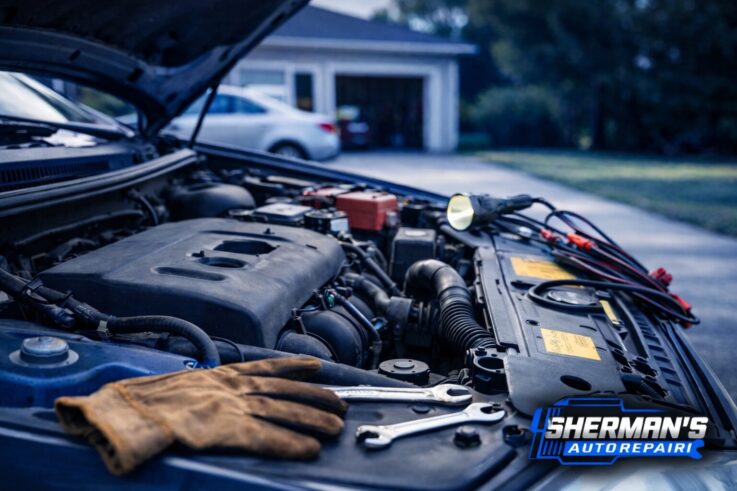

When your car won’t start, it can be stressful and confusing. Most people immediately worry about engine failure, but that’s rarely the case. In most situations, the problem is something much simpler, like the battery, starter, fuel system, or an electronic issue.
What really matters is how you respond at the start. Taking the right steps can help avoid damage, save money, and make it easier to fix the problem correctly.
Stop Trying to Start the Car
If your car does not start after a few tries, stop trying to crank it. Repeated attempts can overheat the starter, drain the battery, and cause new electrical problems that weren’t there before.
What may start as a small issue can quickly turn into a bigger repair. Stopping early protects your vehicle and keeps the problem from getting worse.
Pay Attention to What Happens
Before checking anything, notice what your car is doing. Listen for sounds like clicking or grinding, or notice if there is no sound at all. Look at the dashboard to see if the lights stay bright or go dim.
If the car stalled earlier before it wouldn’t restart, that’s also important. These small details can tell a lot about what’s wrong and help avoid unnecessary repairs.
Check Gear and Safety Systems
Many cars are designed not to start unless certain safety steps are met. The car must be fully in Park or Neutral, and the brake pedal or clutch must be pressed.
For push-button vehicles, the system must also detect the key fob. If any of these signals are missing, the car may not respond at all even though nothing is actually broken.
Check the Battery
The battery is the most common reason a car won’t start, but it’s also easy to misjudge. Dim lights, clicking sounds, or electronics turning on without the engine starting can all point to weak battery power.
Battery age matters, especially in hot weather where batteries wear out faster. A battery can look fine and still fail when it’s under stress, which is why proper testing is important.
Check the Starter System
The starter is what turns the engine over. If you hear rapid clicking, it often means the starter isn’t getting enough power. A single loud click may mean the starter itself is wearing out.
If there is no sound at all, the issue could be related to the ignition switch, wiring, or electrical relays. Because different problems can sound the same, testing is needed to know for sure.
Check Fuel Delivery
If the engine cranks but won’t start, fuel may not be reaching the engine. This can be caused by a weak fuel pump, low fuel pressure, or a problem in the fuel system.
You might hear the fuel pump briefly when turning the key on, but listening alone isn’t enough. Fuel pressure testing is the only way to know if fuel delivery is working properly.
Check Ignition and Sensors
Modern cars rely on sensors and electronics to control starting. Problems with ignition coils, spark delivery, or engine sensors can stop the car from starting even though the engine turns over.
These issues can’t be found by looking under the hood. Diagnostic scanning is needed to see what the car’s computer is detecting.
Check Security System Issues
Many vehicles have anti-theft systems that can prevent starting if the key is not recognized. A flashing security light or a car that cranks but won’t start can point to this type of issue.
Security system problems often look like battery or starter trouble, but they require electronic testing to fix correctly.
Avoid Guessing and Replacing Parts
Replacing parts without knowing the real cause often leads to wasted money and repeat breakdowns. Many no-start problems feel the same even though they come from different systems.
Proper testing helps find the real issue the first time and prevents new problems from being created by unnecessary repairs.
Preventing Future Issues
Most no-start problems don’t happen suddenly. Small issues build up over time, like a weak battery, worn starter parts, or loose electrical connections. Regular maintenance helps catch these problems before they leave you stuck.
Basic inspections can also spot early warning signs that don’t trigger dashboard lights yet. Taking care of small issues early makes your car more reliable and lowers the chance of unexpected breakdowns.
When to Call a Professional
If the problem isn’t obvious or keeps coming back, professional diagnosis is the next step. At Sherman’s Auto Repair, no-start problems are checked using proper testing instead of guessing.
Finding the real cause early saves time, reduces repair costs, and helps prevent the same issue from happening again.

