
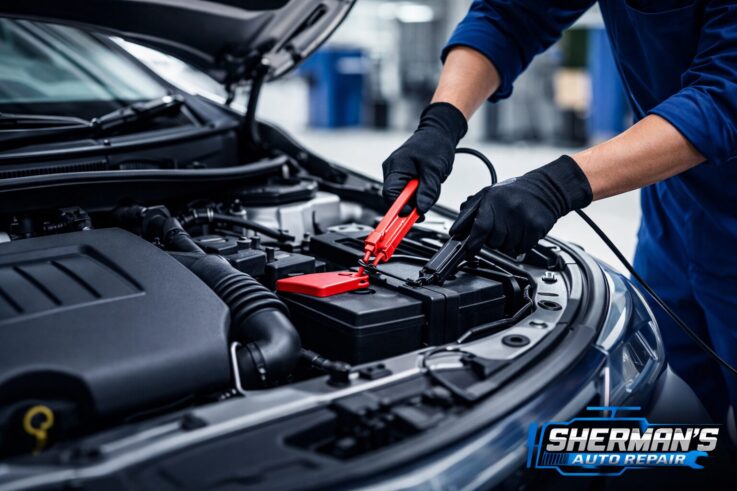

When your car won’t start, the situation is rarely as simple as it seems.
You turn the key or press the button. Nothing happens. Or maybe you hear a click. Or the engine cranks but refuses to run.
At that moment, guessing is the fastest way to waste time — and possibly money.
Modern vehicles rely on tightly connected electrical, ignition, fuel, and security systems. A failure in any one of them can create the same symptom: a car that won’t start. The real question is not “What part should I replace?” The real question is: What system is failing?
That answer requires proper diagnosis.
First: What Is Your Car Doing?
Before assuming what’s wrong, focus on what the vehicle is actually doing. The sound — or silence — when you try to start it is the most important clue.
Notice these patterns:
No sound at all when turning the key
A single click or repeated clicking
The engine cranks but does not start
Dashboard lights flicker or dim
You can also make a few basic observations:
Make sure the vehicle is fully in Park or Neutral
Check that the battery terminals are not visibly loose or heavily corroded
Confirm there is fuel in the tank
Listen for a brief humming sound from the fuel pump when the key is turned to “ON”
These steps help identify the symptom, not the solution.
For example:
If the engine cranks but will not start, the issue may involve fuel or ignition systems.
If you hear only a click or complete silence, the starting system may be affected.
The key point is this: similar symptoms can come from very different causes. Identifying what the car is doing helps narrow the possibilities, but it does not confirm the failure.
The Most Common Reasons a Car Won’t Start
Battery Failure
A weak or dead battery is common — but not automatic.
Corrosion, age, heat, and short driving trips can reduce battery performance. You may notice clicking sounds or dim interior lights.
However, a battery can appear functional and still lack the power required to crank the engine fully.
Starter Motor Problems
If you hear a single click or repeated clicking, the starter motor may not be engaging correctly.
Starters wear out over time. When they fail, the engine won’t crank — even if the battery tests fine.
Charging System Issues
If the vehicle stalled before failing to restart, the charging system may not be supplying power properly.
Replacing the battery alone will not solve a charging issue. The underlying system must be tested.
Ignition or Security System Faults
If the dashboard lights turn on but the engine does not crank, the issue may involve the ignition switch or immobilizer system.
Modern vehicles use anti-theft systems that can prevent starting if a fault is detected.
Fuel or Engine Management Problems
If the engine cranks but does not start, the issue may involve fuel delivery, ignition timing, or electronic control systems.
Fuel pumps, ignition components, sensors, and control modules can all prevent proper startup.
Why Guessing Often Makes the Problem Worse
Replacing parts without testing can:
Drain the battery from repeated attempts
Damage the starter motor
Mask the original issue
Increase repair costs
Many no-start situations feel similar from the driver’s seat. Internally, they can be completely different failures.
Accurate diagnosis saves time, prevents unnecessary part replacement, and ensures the correct repair is performed the first time.
When You Should Stop Trying to Start the Car
If the vehicle does not start after a few attempts, continuing to crank the engine can strain components and reduce the battery further.
Professional diagnostic testing is recommended if:
A jump start does not resolve the issue
Warning lights remain illuminated
The problem returns repeatedly
You notice unusual smells or noises
These signs often indicate system-level faults that require specialized testing equipment.
How Professional Diagnosis Works
A proper no-start diagnosis involves testing — not guessing.
This typically includes:
Verifying battery and charging system performance
Testing starter function
Inspecting wiring and connections
Scanning onboard computer systems for stored fault codes
Confirming fuel and ignition operation
This process identifies the failing system before any parts are replaced.
That precision matters.
If Your Car Won’t Start, Get It Checked Properly
A no-start condition is rarely random. It is a signal that something in the vehicle’s starting, charging, ignition, or fuel system is not operating correctly.
At Sherman’s Auto Repair, no-start issues are diagnosed using professional testing equipment designed to pinpoint the exact cause. The goal is simple: identify the problem accurately and repair it correctly — without unnecessary parts or repeated breakdowns.
If your car won’t start and the cause isn’t clear, scheduling a proper diagnostic inspection is the fastest way to get back on the road with confidence.

